Butterfly on a Flower 3D Shadow Box SVG Review
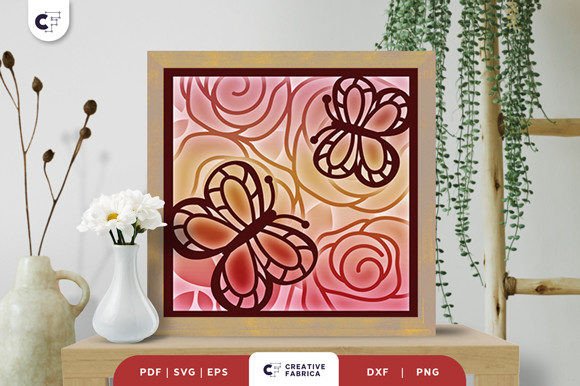
When I first opened the file for Butterfly on a Flower 3D Shadow Box SVG, my initial reaction was one of visual delight mixed with immediate practical scrutiny. As someone who has spent years evaluating embroidery files for client projects and my own handmade shop, I know that a beautiful graphic on a screen does not always translate to a flawless stitched result. This design presents a unique challenge: it mimics a paper cut ornament with flowery shadows and a large butterfly, creating a three-dimensional effect that relies heavily on layering and depth. The graphics are heaped with roses, which suggests a lush, romantic aesthetic, but the execution in thread requires careful planning.
The First Impression and Visual Mood
The mood this design creates is undeniably whimsical yet structured. It feels like a piece of art meant to be displayed rather than just worn. The concept of a shadow box brings a sense of luxury and dimensionality that flat embroidery often lacks. For an embroidery designer looking to elevate their product line, this machine embroidery design offers a sophisticated alternative to standard floral motifs. It naturally belongs in projects where the customer expects a bit of extra flair—a boutique pillow cover, a special occasion garment, or a high-end personalized gift.
The layout is dense with detail. The roses are not merely outlines; they are implied through layers of color and shadow. This "heaped" arrangement gives the design weight and presence. However, this density is exactly what demands our attention. When you look at the 3D SVG file, you see the promise of depth, but the reality of stitching depends entirely on how well the individual elements separate and how the stitch types are assigned. If the layers are too close together without proper spacing, the final product could look muddy rather than dimensional.
Real-World Application: From Screen to Stitch
Let's imagine a real scenario. You are preparing a custom embroidered tote bag for a local craft fair or an Etsy listing. You want something that stands out against the canvas fabric. Placing the Butterfly on a Flower 3D Shadow Box SVG in the center of a natural cotton tote bag sounds perfect. The contrast between the sturdy fabric and the delicate rose details would create a nice tactile experience. The butterfly on top acts as a focal point, drawing the eye immediately.
However, consider the logistics. A tote bag requires a larger hoop size to accommodate the full width of the flowers and the wingspan of the butterfly. If your machine has a smaller maximum hoop, you might need to split the design, which can ruin the continuity of the shadow box effect. Furthermore, if you are producing these for sale, the production time becomes a factor. Designs with high stitch counts take longer to run. If you are using this for commercial embroidery, you must calculate whether the increased production time justifies the higher price point for the finished product.
I also envision this design on a sweatshirt. The soft fleece provides a great background for the satin stitch used to define the butterfly wings. But here lies a risk: the texture of the sweatshirt fabric can sometimes swallow up fine details. If the roses are too intricate, the loops of the fleece might obscure the edges of the petals. In this case, simplifying the inner details or choosing a slightly smoother fabric blend might be necessary to maintain clarity.
Navigating Technical Challenges and Limitations
While the artistic vision is strong, there are specific areas where this design requires caution. Small hoop sizes are the first enemy. If you attempt to stitch this on a cap or a small baby item, the intricate corners of the leaves and the fine lines of the butterfly antennae may disappear into the fabric grain. For embroidery projects involving curved surfaces like caps, the distortion caused by the curvature can flatten the intended 3D shadow effect, making the design look two-dimensional and potentially distorted.
Texture is another critical factor. While textured fabrics like corduroy add character, they are difficult for designs with dense fill stitches. The needle may struggle to penetrate thick piles, leading to skipped stitches or uneven tension. Similarly, thin fabrics like silk or lightweight linen require a very light touch. Without the correct stabilizer, the pull of the thread could pucker the fabric around the heavy rose clusters, ruining the drape of the garment.
Dark fabrics present a different set of challenges. To achieve the "shadow box" look, the design likely relies on lighter thread colors to pop against the background. On a black or navy shirt, you will need to ensure there is sufficient underlay and perhaps a white backing layer to prevent the dark fabric from showing through the gaps in the satin stitches. This adds steps to your workflow and increases thread consumption.
Impact on Product Value and Brand Perception
How does this design affect the perceived value of your handmade product? A well-executed Butterfly on a Flower 3D Shadow Box SVG signals professionalism. Customers associate complex, layered designs with higher quality and more effort. When a buyer sees a crisp, dimensional butterfly on a flower, they perceive the item as a premium gift. This enhances brand consistency for sellers who focus on elegant, nature-inspired aesthetics.
However, if the stitching is sloppy, the opposite happens. Mismatched thread colors or visible puckering can make a boutique product look amateurish. The "3D" aspect is all about illusion; if the layers don't align perfectly, the magic is lost. Therefore, the success of this design in a commercial embroidery setting relies heavily on the skill of the operator and the quality of the materials used. It is not a "set it and forget it" file; it demands attention to detail.
Practical Designer Notes for Success
Before committing to a full production run, I strongly advise testing the design on scrap fabric first. This allows you to check thread color contrast and review stitch density without risking your final product. Inspect the small details closely to ensure the butterfly wings and rose petals are distinct. Test the design in black and white mockups to verify that the shapes hold up even when color is removed from the equation.
Confirm your hoop size early. Ensure your machine can handle the dimensions of the entire composition. Use a proper stabilizer that matches the fabric type; for stretchy fabrics, a cut-away stabilizer is usually best to prevent distortion over time. Check whether the design works for both personal and commercial projects by reviewing the licensing terms provided by the creator. Do not assume you can sell finished items made from this file unless explicitly stated.
If you are an Etsy seller or a small shop owner, consider creating printable mockups that show the design on various products like aprons, tea towels, and nursery decor. This helps customers visualize the finished product and understand the scale of the embroidery file. Compare light and dark fabric backgrounds to decide which looks best for your target audience.
Final Thoughts on Usability
The Butterfly on a Flower 3D Shadow Box SVG is a versatile asset for creative entrepreneurs who want to add depth to their portfolio. It fits perfectly within the Seasons category, particularly for spring and summer collections, but its timeless floral theme makes it suitable for year-round use. Whether you are crafting a personalized gift for a loved one or stocking shelves with craft business items, this design offers a beautiful opportunity to showcase your skills.
Just remember that the devil is in the details. Take the time to prep your fabric, choose the right threads, and test your settings. When done correctly, the result is a stunning piece of wearable art that elevates any project. For those willing to put in the work, this design is a worthy addition to your collection of design assets.