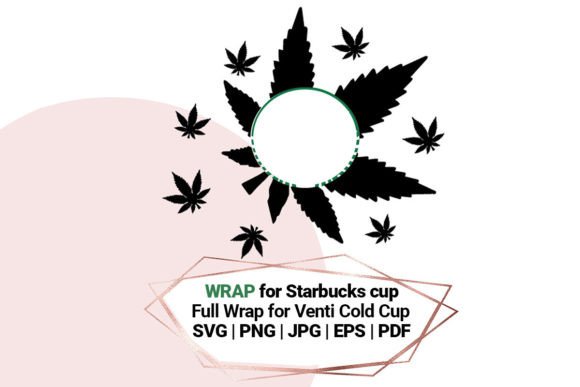
Сannabis Wrap Svg for Starbucks Cup 24Oz
When I first opened the Сannabis WrapSvg for Starbucks Cup 24Oz, my immediate thought wasn't about the file formats or the price point. It was about the vibe. As a designer who spends hours evaluating digital assets for real-world application, I look for that specific spark where a graphic stops being just an image and starts feeling like a finished product. This design captures a distinct mood: playful, slightly rebellious, yet perfectly tailored for the modern coffee culture aesthetic. It feels like it belongs on a tote bag at a craft fair, a cozy sweatshirt in a boutique, or perhaps a personalized gift for a friend who loves both their morning brew and the green leaf.
The visual personality of this piece is strong. The concept of wrapping a classic 24oz cup creates an immediate sense of familiarity. We all know that iconic shape. By integrating the cannabis theme into that silhouette, the design achieves a clever juxtaposition that is likely to catch the eye of a potential buyer. However, as someone who has seen too many embroidery projects fail because the artist didn't consider the stitching process, I need to dig deeper than just the look. Does this translate well from a screen to fabric? Can it handle the rigors of a machine embroidery project without losing its soul?
From Digital File to Finished Product
Imagine you are prepping for a busy weekend at a local craft market. You have a stack of plain canvas tote bags ready to go, and you want to create something that stands out among the generic floral prints and motivational quotes. You decide to use the Сannabis Wrap Svg for Starbucks Cup 24Oz. The layout is compact enough to fit neatly on the front panel of a tote, but detailed enough to command attention when a customer picks it up. The curve of the cup suggests movement, which works beautifully with satin stitch outlines, giving the impression of liquid flowing or steam rising.
For small business owners and Etsy sellers, the versatility here is key. This isn't just a t-shirt design; it is a versatile asset for your craft business. Picture a baby onesie with a smaller version of this wrap, creating a humorous "first coffee" gift for new parents who appreciate the irony. Or consider using it on a kitchen towel for a holiday gift set. The design fits naturally into categories like Graphics and Crafts because it bridges the gap between a digital download and a tangible, handmade product. When you hold a finished embroidered patch featuring this wrap, the value perception jumps significantly compared to a printed sticker. Customers trust the craftsmanship of embroidery more, associating it with durability and quality.
However, not every surface is created equal. If you plan to use this for custom apparel like a hoodie, you must consider the fabric texture. A smooth cotton twill on a cap might render the details sharply, but a rougher bouclé fabric could obscure the finer lines of the cup's rim. The design relies on clear contrast to maintain its identity. If you are working with dark fabric, the thread color selection becomes critical. You cannot simply throw white thread over black material and expect the same crispness you see in the mockup. You need to think about underlay stitches and density to ensure the design pops without puckering the fabric.
Navigating Technical Challenges
Let's talk about the realities of hoop size and stitch density. While the description mentions a 24oz cup, the actual dimensions of the embroidery file will dictate where you can place it. Small hoop sizes present a significant challenge for designs with intricate curves. If the machine embroidery design includes tiny lettering or very fine details within the wrap, testing on scrap fabric is non-negotiable. I have seen beautiful files fall apart because the digitizer did not account for the tension required to stitch such tight corners.
If you intend to use this for commercial embroidery projects, you must verify the licensing terms before selling any finished items. Just because the package includes SVG, PNG, PDF, JPG, and EPS files doesn't automatically grant commercial rights for the physical goods you sell. Many designers overlook this step until they receive a cease-and-desist notice. Ensure you have permission to sell the final embroidered products. Furthermore, check the recommended stabilizer type. For stretchy fabrics like those found in sweatshirts or baby clothes, a cut-away stabilizer is often necessary to prevent distortion after washing. A tear-away might suffice for a rigid pillow cover, but it will fail on a garment that gets tossed in the laundry frequently.
Visual Appeal and Customer Engagement
The success of any embroidery project often comes down to how the customer perceives the brand consistency. Using a high-quality design like the Сannabis WrapSvg for Starbucks Cup 24Oz signals professionalism. It shows that you care about the details, from the file selection to the final stitch. In a crowded marketplace, buyers are looking for uniqueness. This design offers a conversation starter. It is not just a cup; it is a statement piece that resonates with a specific lifestyle.
Consider the scenario of creating a limited edition run for a boutique. You pair this wrap design with earthy tones—olive greens, deep browns, and creams. The result is a cohesive collection that feels curated rather than random. The design acts as a focal point, drawing the eye immediately. Whether it is on a tote bag design or a sweatshirt embroidery, the visual weight of the cup shape anchors the composition. This balance is what separates a hobbyist's work from a professional's portfolio.
There are, however, areas where caution is required. Curved surfaces like caps can be tricky. The flat nature of the digital file needs to be mentally adjusted to the curvature of the hat. If the design is too wide, it might distort around the brim or the crown seam. Similarly, if you attempt to use this on a thin fabric, the weight of the threads could cause the material to sag or tear over time. Always test your thread colors against your fabric choice. A light thread on a light fabric might disappear, while a dark thread on a dark fabric could look muddy if the stitch density is too low.
Practical Steps for Success
To ensure your finished product meets your standards, follow a strict workflow. First, review the stitch density in your digitizing software. Look for areas where the fill stitches might overlap excessively, causing bulkiness. Next, inspect the small details. Are there any isolated elements that might get lost in the stitching process? Run a test on a piece of scrap fabric that matches your final material. Check the contrast in black and white mode to ensure the shapes remain distinct even if the color fades or is viewed from a distance.
Don't forget to compare your design on both light and dark backgrounds. Sometimes a design looks perfect on a white background in Photoshop but fails miserably when stitched onto a navy blue shirt. Use proper stabilizer to support the fabric during the applique design or direct-to-garment process. If you are creating a digital embroidery file for others, document your settings so they can replicate your results. For personal use, keep a log of what worked so you can refine your technique for future projects.
Ultimately, the Сannabis WrapSvg for Starbucks Cup 24Oz is more than just a file; it is a tool for creativity. It invites you to experiment with textures, colors, and applications. Whether you are making a personalized gift for a loved one or building a line of small shop products, this design provides a solid foundation. It balances humor with style, making it suitable for a wide range of audiences. By approaching it with a critical eye and a respect for the technical limitations of embroidery, you can transform a simple vector graphic into a cherished, high-quality item that people will want to wear, carry, and display.
In the world of craft business, the difference between a good product and a great one often lies in the preparation. Take the time to understand the nuances of this design. Test it thoroughly. Respect the materials. And when you finally pull the finished piece from the hoop, you will see that the effort was worth it. The embroidered patch or pillow cover you create will stand out, proving that thoughtful design combined with skilled execution is the ultimate recipe for success.